
 What Is POCScreen?
More than half of first-trimester miscarriages are caused by chromosomal abnormalities.1
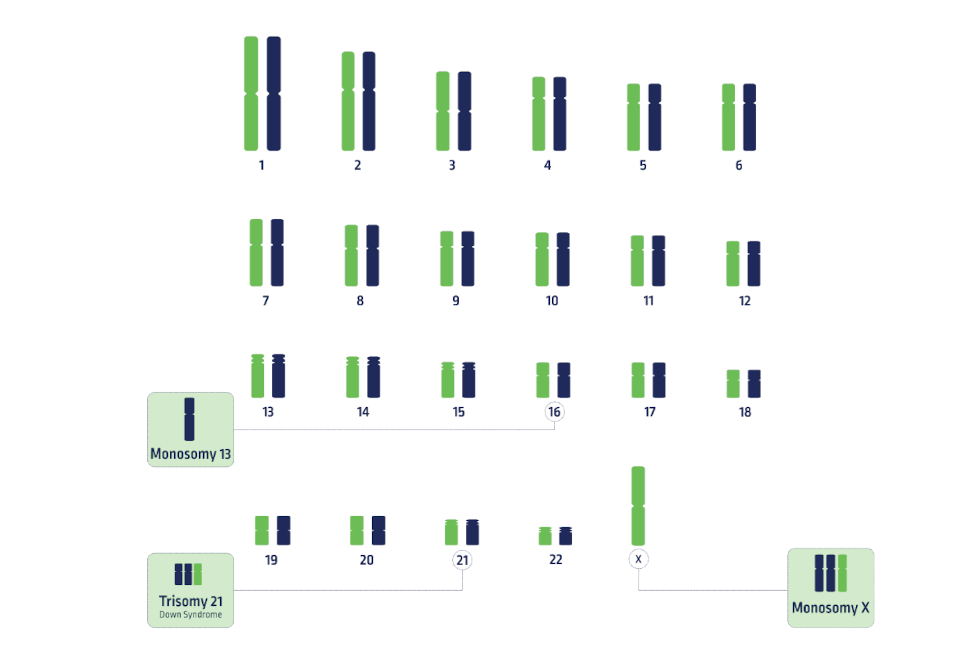
The POCScreen test offered by Next Biosciences employs next generation sequencing technology to rapidly and accurately screen products of conception for abnormal chromosome numbers, and large genetic deletions and/or duplications of chromosomal material.
The test aims to give patients answers after a loss and provide healthcare providers with information for reproductive counselling.
Benefits of POCScreen Testing
POCScreen provides both clinical and emotional value by:

Fast result turnaround time (7-10 working days)

No need for cell culturing

Test is done on next generation sequencing technology which ensures high resolution results

Allows for the detection of all chromosomes, as well as, large duplications and deletions

Accurately detects unbalanced translocations >20Mb

Pick-up rate of approximately 50%2

Who Should Consider POCScreen?
POCScreen may be recommended for:
- Couples who have experienced a pregnancy loss
- Individuals with recurrent miscarriages
- Patients seeking answers and clarity after miscarriage
- Healthcare providers needing information for reproductive counselling
Technology
Next Biosciences uses next generation sequencing to rapidly and accurately screen Products of Conception (POC) for chromosomal abnormalities.
- >99% analytical specificity3
- >99% diagnostic accuracy3
- >99% analytical sensitivity3
- Test failure rate of 0.1% 2
Methodology

Sample assessment

DNA extraction

Whole genome amplification

Library preparation

Next generation sequencing

Results and report generation
How POCScreen Works

Healthcare provider completes the Test Requisition Form (TRF)


Sample is collected from pregnancy tissue

Sample and TRF are sent to Next Biosciences

DNA sequencing (NGS) is performed

Results are available within 7–10 working days
References
- Choi TY, Lee HM, Park WK, Jeong SY, Moon HS. Spontaneous abortion and recurrent miscarriage: A comparison of cytogenic diagnosis in 250 cases. Obstet Gynecol Sci. 2014 Nov,57(6):518-525.
- Next Genetics Products of Conception Statistics January 2020 – December 2020, data available upon request.
- POC in house validation study, data available upon request.