 What Is A Chromosomal
Preimplantation Genetic Testing for Structural Rearrangements, or PGT-SR, is designed for individuals with a chromosome structural rearrangement also called a translocation, PGT-SR (Preimplantation Genetic Testing for chromosomal Structural Rearrangements) can be performed to improve the chance of establishing a healthy pregnancy. PGT-SR involves testing embryos created through in vitro fertilisation (IVF) and then transferring only embryos with the correct amount of genetic material.
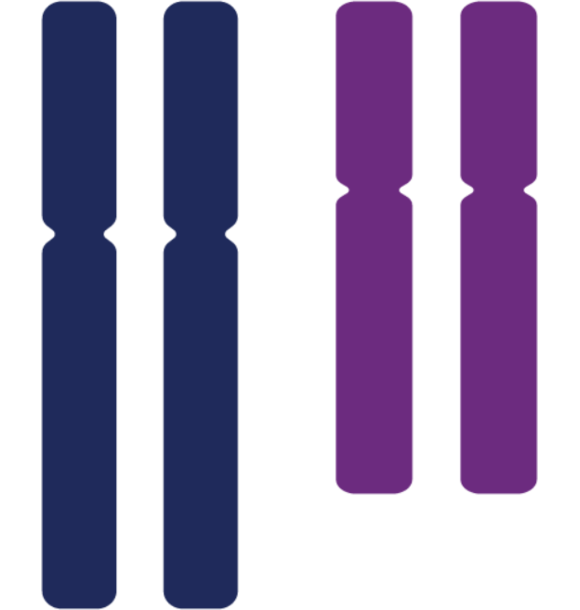
Normal
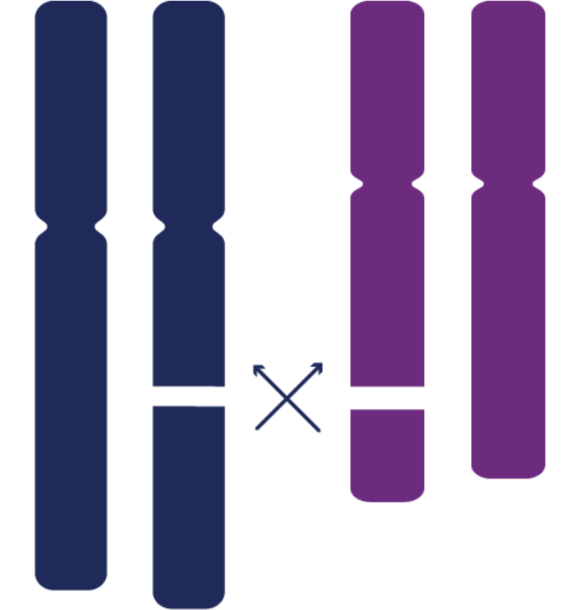
Balanced
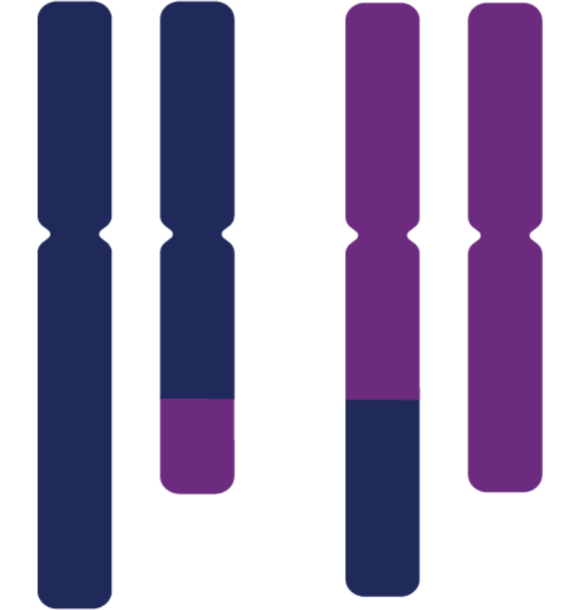
Unbalanced
What Is a Chromosomal Rearrangement?
Chromosomal rearrangements, also referred to as a translocation, are changes from the usual size or arrangement of chromosomes. Many carriers of chromosome rearrangements are healthy and may not become aware of their carrier status until they try to have children. Individuals with chromosome rearrangements have an increased risk of producing embryos with the incorrect amount of genetic material, which typically do not lead to a successful pregnancy.
The Three Most Common Chromosome Rearrangements Include:
Reciprocal translocations – these occur when pieces of genetic material break off from two different chromosomes and swap places. People that carry a balanced translocation can create embryos that have either the same balanced translocation, the unbalanced form of the translocation (where there is a gain or loss of chromosomal material), or a completely normal set of chromosomes.
Robertsonian translocation – these occur when two chromosomes join together to form one large chromosome. This results in an overall chromosome number of 45 rather than the usual 46. It happens most often between chromosomes 13/14 and 14/21 but can also involve certain other chromosomes.
Inversions – occur when a segment of a chromosome is flipped and inserted upside down and this may lead to embryos with missing or duplicated pieces of the chromosome.
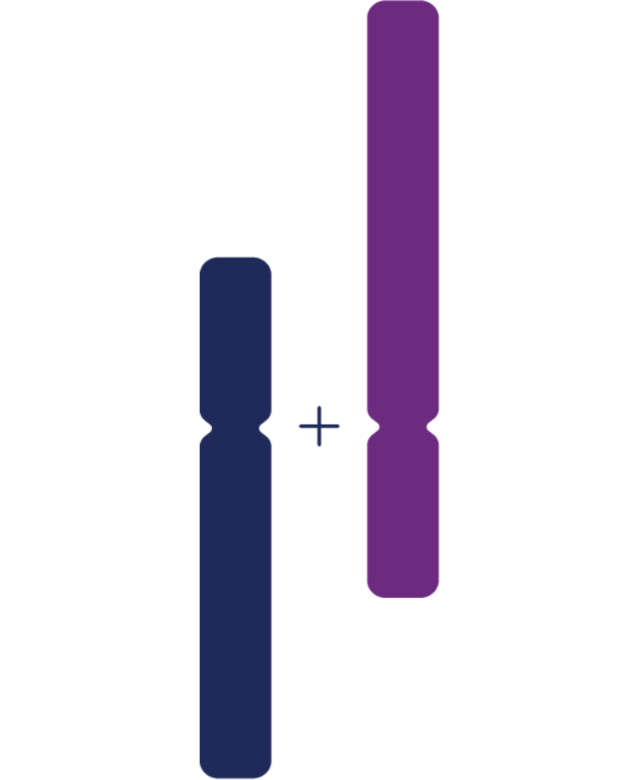
Normal Nonhomologous,
Acrocentric Chromosomes
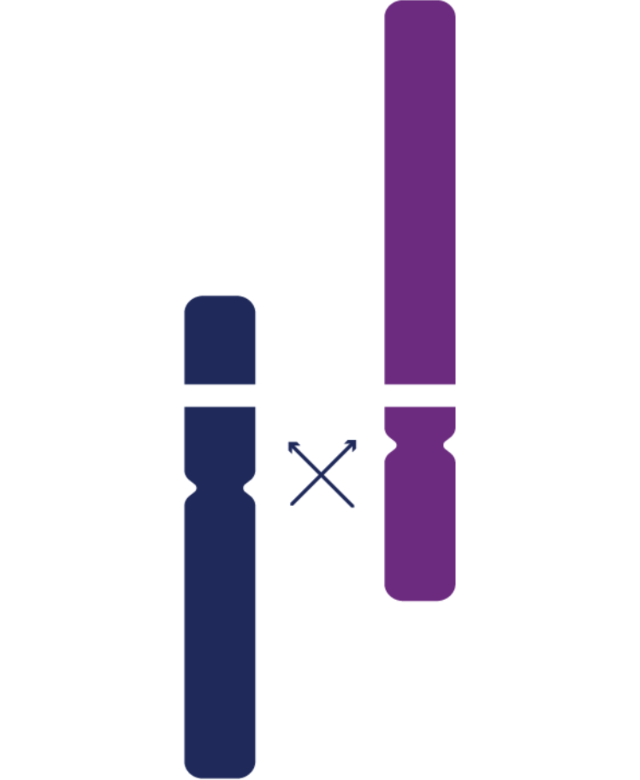
Breakage and Rejoining
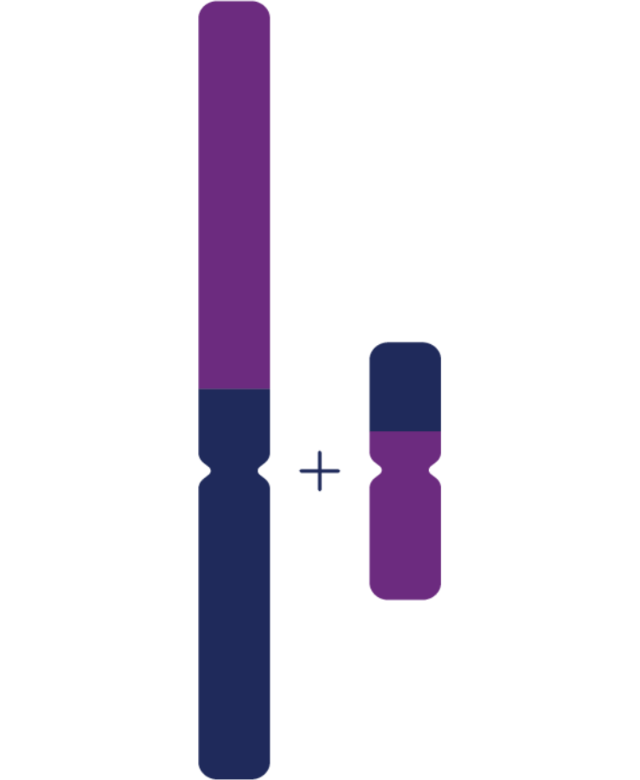
Robertsonian Translocation
For people with a chromosomal rearrangement, PGT-SR can help identify embryos with the correct amount of chromosomal material that are most likely to lead to a successful pregnancy and healthy live birth.
Indications for PGT-SR
PGT-SR may be considered if a couple had a child or pregnancy with a chromosome arrangement or if an individual has been found to be a carrier of a chromosome rearrangement, including an:
- Inversion
- Reciprocal translocation
- Robertsonian translocation
If a parent has a chromosome rearrangement, will it always be passed on? Not necessarily, there are several possibilities for each pregnancy:
- The child may inherit an entirely normal chromosome arrangement
- The child may inherit the same chromosome rearrangement as the parent
- The child may be born with a learning disability, developmental delay, and/or health problems
- The pregnancy may end in miscarriage
Therefore, it is usually possible for a person who carries a chromosome rearrangement to have healthy children, and many do. As each rearrangement is unique, carriers would have to discuss their particular situation with a genetic counsellor or their healthcare provider.
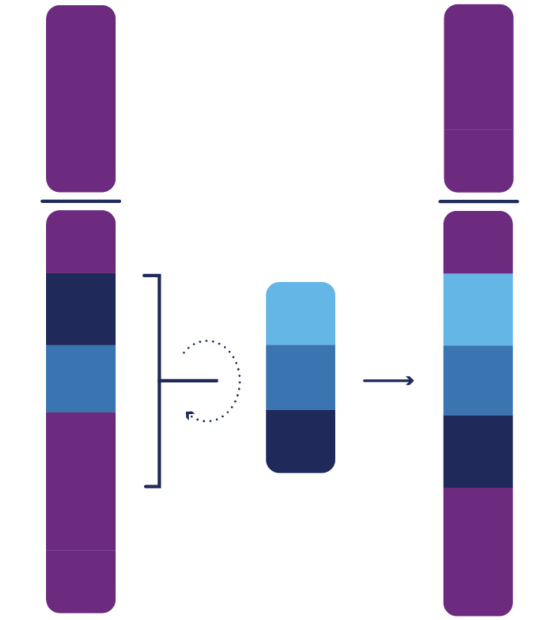
Paracentric Inversion
(Does not include centromere)
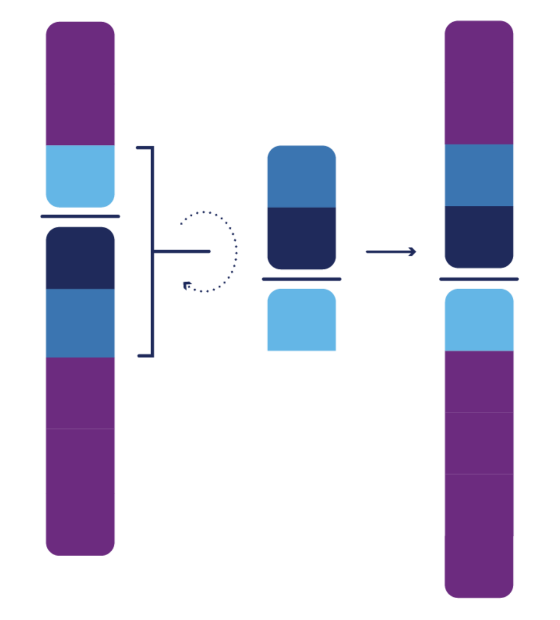
Pericentric Inversion
(Includes centromere)
How the PGT-SR Process Works
The PGT-SR process depends on the specific case, a karyotype confirming the structural rearrangement is required for review by the laboratory prior to commencing IVF treatment.
In most cases the testing can be done using the same technology and process as PGT-A. If, following review of the karyotype, it is not possible to use PGT-A technology, the PGT-M process may need to be followed. This will be discussed on a case-by-case basis.
It is important to note that PGT-SR cannot distinguish between a balanced carrier of a structural rearrangement and a non-carrier.
Frequently Asked Questions
Find answers to common questions about PGT-SR: