 What is the PharmaGene Test?
Small genetic changes encoding proteins in the Pharmacokinetic pathways related to Absorption, Distribution, Metabolism and Excretion (ADME) of drugs and other compounds, can make big changes in the protein’s functionality.

What is Pharmacogenomics?
Pharmacogenomics studies how genetic variations affect:

Drug metabolism

Medication effectiveness
Risk of side effects
How Genetics Affect
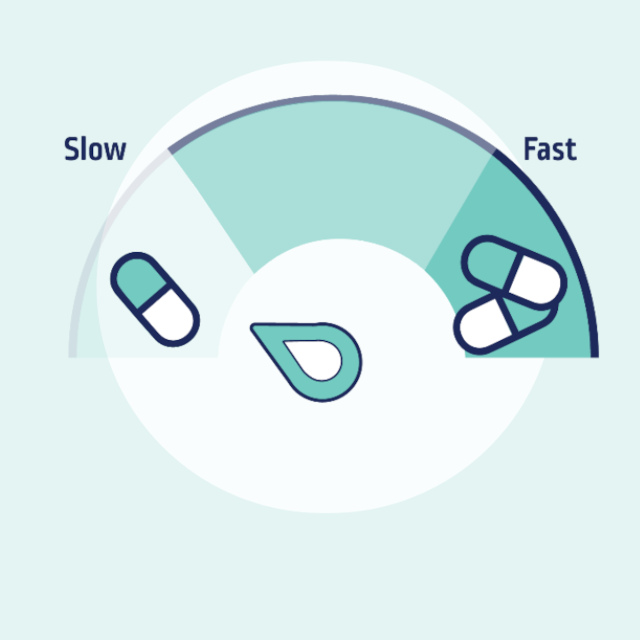
Metabolise drugs too slowly


Increased side effects
Metabolise drugs too quickly

Reduced effectiveness
PharmaGene identifies these patterns to support personalised medication decisions.
How Genetics Affect Medication Response
There are more than 200 medications that are affected by genetic variations in our DNA. Among these medications are those commonly prescribed for cardiovascular disease, diabetes, mental health, cancer treatment, and pain management. Tailoring a patient’s treatment plan based on their genetics can reduce potential toxicity and improve efficacy. Countless pharmacogenomics studies have been published which has shown to improve outcomes for these patients. Through PharmaGene, the right treatments can be found, the cost of care will be reduced and improve quality of life for patients.
Who Can Benefit from Pharmacogenomic Testing?
- Individuals on multiple medications
- Patients experiencing side effects
- Those with poor treatment response
- Anyone planning future medication use
Clinical Decision Support
Healthcare providers can:
- Review medication compatibility
- Adjust dosages
- Reduce risk of adverse reactions
- Optimise treatment outcomes

Improvements in
medication safety
100% of participants had at least one variant know to impact medication outcomes, and 66% of participants had a generic risk for one of their currently prescribed medications.

Improvements in
medication safety
Inpatient visits decreased by 14.9%, Emergency department visits decreased by 6.8%, and outpatient visits decreased by 1.9%.

Significant economic
savings
Direct medical charges were reduced by $218.34 per study participant per month, providing a cumulative saving of $37 027 796 over the 32-month study period. These savings were largely related to a decrease in emergency room visits and inpatient hospitalisations.
Additional benefits

Value for you as the practitioner
Make more informed and personalised medication choices for your patients.
Impact positively on patient treatment outcomes. Happy patients recommend practitioners due to positive treatment journeys and outcomes. Differentiate your practice by introducing personalised treatment.
Value for your patients
They will have a list of drugs which may be toxic or ineffective for them.
Fewer adverse reactions to medications.

Value for funders and your patients
Save on cost and time to getting to the right treatment regimen.
For which there are strong studies supporting this.
Examples of the benefits of
Pharmacogenomic testing

Value for you as the practitioner
Late-life depression (LLD) is a major depressive disorder which affects individuals over the age of 60. It is frequently associated with an ineffective response to antidepressants and polypharmacy. Pharmacogenomics provides a tool for HCPs to determine the genetic cause of response rates and side effects to antidepressants.3,4

Polypharmacy
Polypharmacy is a common issue faced by, but not limited to, the elderly. Pharmacogenomics testing would provide a more logical and empirical approach to polypharmacy by helping alleviate adverse effects from both drug-gene and drug-drug interactions5

Cardiovascular drugs
Positive pharmacogenomic findings have been found for the majority of cardiovascular drugs, which suggests that testing prior to treatment can improve efficacy and minimise the risk of toxicity6 and/ or treatment resistance.

Steven Johnson Syndrome (SJS)
In roughly 80% of cases, the cause of Steven Johnson Syndrome (SJS), a rare and serious disorder of the skin and mucous membranes, is based on a reaction to carbamazepine (CBZ) and CBZ-related drugs (i.e. phenytoin and lamotrigine). The majority of these reactions has been linked to a genetic variant on the HLA-B gene (which provides instructions for making a protein that plays a critical role in the immune system). Carriers of the HLA-B*15:02 allele have a strong association with SJS related to the use of the above-mentioned drugs. The presence of the HLA-B*15:02 allele puts an individual at a 25% increased risk of having a SJS when administered with CBZ. SJS can result in death or ICU for protracted periods of time. Knowing the risk upfront means preventing these severe reactions and hospitalisation. The FDA recommends that prior to initiating carbamazepine therapy, testing for HLA-B*15:02 should be performed in patients with ancestry in populations in which it may be present and that CBZ should not be used in patients positive for HLA-B*15:02 unless the benefits clearly outweigh the risks.7

5-Fluorouracil
5-Fluorouracil (5-FU) is a medicine used to treat symptoms of breast cancer, as well as cancers of the colon, stomach, and pancreas. Due to the severity of reactions for some individuals to these medications, the international recommendation is to test before administering. There are four known allelelic variants in the DPYD gene with a strong association for severe adverse reactions to 5-FU, capecitabine, and other analogues.
The prevalence of DPD deficiency, based on activity levels measured in blood cells and the uracil breath test, has been reported as 3%-5% in patients of European origin and 8% in patients of African origin. In addition, the US National Library of Medicine reports a prevalence of partial deficiency of 2%-8%, based on the aforementioned study and others.8,9
How the Test Works

Complete test requisition form
Collect Saliva sample
Results in 3 to 4 weeks

Reviewed with healthcare provider
Frequently Asked Questions
Find answers to common questions about Pharmacogenomic Testing:
References
- Royal College of Physicians and British Pharmacological Society. Personalised prescribing: using pharmacogenomics to improve patient outcomes. Report of a working party. London: RCP and BPS, 2022
- Jarvis, J et al. Real-World Impact of a Pharmacogenomics-Enriched Comprehensive Medication Management Program. J. Pers. Med. 2022, 12(3), 421
- Jha, M and Trivedi, M. Pharmacogenomics and Biomarkers of depression. Handb Exp Pharmacol. 2019. 250: 101-113.
- Bondy, B. Pharmacogenomics in depression and antidepressants. Dialogues in clinical neuroscience. 2005, 7:223-230.
- Sharp, et al. Polypharmacy: A Healthcare Conundrum with a Pharmacogenetic Solution. Crit Rev Clin Lab Sci. 2021, 1-20.
- Bozina, et al. Use of pharmacogenomics in elderly patients treated for cardiovascular diseases.
- Fang, et al. A Screening Test for HLA-B∗15:02 in a Large United States Patient Cohort Identifies Broader Risk of 7. Carbamazepine-Induced Adverse Events. Front Pharmacol. 2019. 10:149.
- Federico Innocenti et al. 2020. All You Need to Know About DPYD Genetic Testing for Patients Treated With Fluorouracil and Capecitabine: A Practitioner-Friendly Guide. JCO Oncol Pract. 16:793-798.
- Brooks, G. 2021. Economic Analysis Justifies the Cost of DPYD Genotyping to Safeguard Patients With Colon Cancer From Chemotherapy-induced Toxicity. J Clin Oncol. 39, 2021. 3:55)